
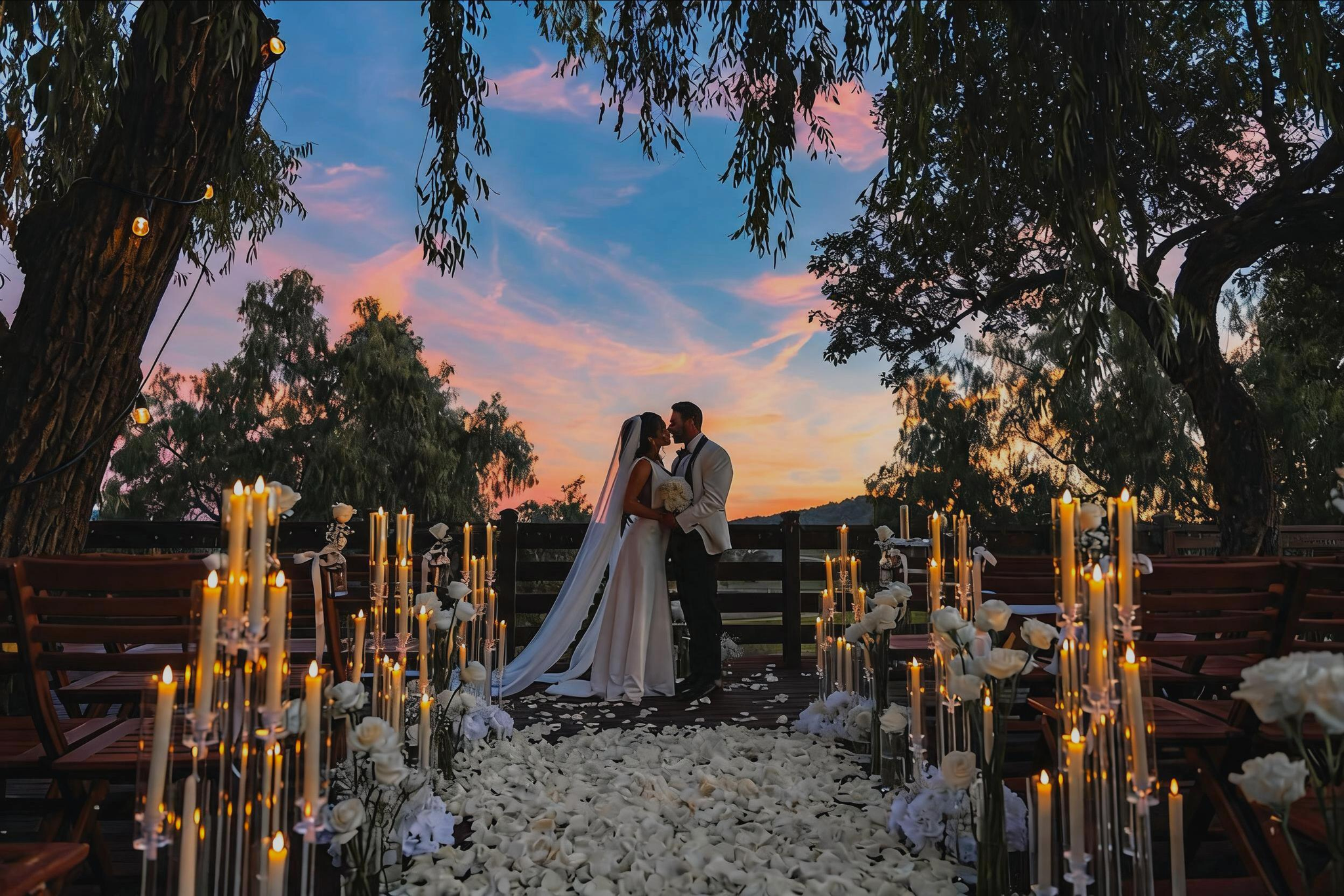
Thoughtful planning for a celebration that feels beautifully, unmistakably yours.
There's a reason so many couples end up celebrating their wedding in California.
Rolling vineyards, golden hills, historic estates, hidden gardens, dramatic coastline — from Paso Robles down through San Luis Obispo to Santa Barbara and the towns in between, the Central Coast gives couples an enormous range of ways to get married. Wine country barns. Spanish-style courtyards. A bluff overlooking the ocean. A ranch that's been in someone's family for four generations.
But a gorgeous backdrop only gets you so far.
The weddings people actually remember aren't the ones with the most flawless florals or the most Instagrammable tablescape. They're the ones where the couple was actually there — present enough to laugh, notice things, and enjoy the people who showed up for them.
If a Central Coast wedding is somewhere on your radar, here's what's worth thinking through early.
Start With How You Want the Day to Feel
Before you touch a Pinterest board, sit with the question of what experience you're actually trying to create.
An intimate dinner with twenty people you love most? A big, romantic vineyard bash that runs until midnight? A polished estate wedding with a full orchestra of moving parts? A backyard-style gathering where nobody wants to leave?
There's no formula you owe anyone here.
The celebrations that land well are the ones that reflect the actual people getting married — their humor, their priorities, the shorthand only they share. Get clear on what matters to you two specifically, and every decision after that gets easier, because you'll know instantly whether something is a "yes, that's us" or just a "should."
Pick the Part of the Coast That Actually Fits
This region's biggest gift to couples is variety — and its biggest planning trap is treating all of it as interchangeable.
Paso Robles and the wine country around it mean vineyards, working ranches, big open sky, and heat that can climb fast in July and August. San Luis Obispo splits the difference — walkable downtown charm, easy coastal access, cooler and more forgiving weather most of the year. Santa Barbara and the Santa Ynez Valley bring Spanish architecture, historic estates, and gardens, but also some of the strictest noise ordinances and permit requirements on the Central Coast — worth knowing before you fall in love with a property that can't actually accommodate a live band past 10 p.m.
There's no single "best" location. There's the one that fits the wedding you're actually planning.
When you tour a venue, resist judging it purely on how it photographs. Ask about guest capacity, parking and shuttle logistics, in-house catering restrictions (many vineyard venues require you to use an approved caterer, full stop), sound curfews, and what's actually included in the rental versus what shows up as a separate line item later.
Walk the property and picture the whole day moving through it — getting ready, ceremony, cocktail hour, dinner, dancing. A venue should function beautifully, not just look beautiful in photos.
Plan Around the Season, Not Just the Calendar
California's weather has a reputation, and mostly it earns it. But an outdoor wedding here still takes real planning.
The temperature swing between coastal towns and inland wine country can be dramatic — a warm October afternoon in Los Olivos can turn into a genuinely cold evening once the sun drops, and guests in sundresses will feel it. Coastal fog is its own variable: it can roll in in the evening even in the middle of summer, which matters a lot if your ceremony is scheduled for golden hour on a bluff.
If you're outdoors, ask early about shade structures, patio heaters, an indoor backup space, and what the venue's actual rain (or, increasingly, red-flag fire-weather) contingency looks like. In fire season, some hillside and ranch venues have real restrictions on open flame and generators — details you want long before your invitations go out.
A backup plan isn't pessimism. It just means that if the weather does something unexpected, you keep enjoying your day instead of quietly panicking through it.
Build Your Budget Around What You Actually Care About
A wedding budget isn't just a spreadsheet — it's a set of decisions about where your money should work hardest for you.
Before splitting funds across a dozen categories because that's what a checklist told you to do, figure out your actual priorities. Maybe incredible food and local wine are non-negotiable. Maybe photography matters most, because those images outlast everything else from the day. Maybe you've always wanted live music, or a venue where people can stay the whole weekend instead of driving home that night.
There's no universally "correct" allocation. Beautiful doesn't require excessive.
One thing couples consistently underestimate on the Central Coast specifically: transportation and shuttle costs. Many of the best venues are remote enough that guests can't just Uber home, which means shuttles, and shuttles aren't free. Budget for it early rather than discovering the gap two months out.
The goal is a day that feels abundant in the ways that matter to you — not one shaped by someone else's expectations of what a wedding is supposed to include.
Choose Vendors Who Get What You're Going For
Your vendors shape both the wedding itself and what it feels like to plan it.
Talent matters, obviously. But so does whether someone communicates well, actually listens to your priorities, and works well with other vendors on the day. Ask real questions. Read full portfolios, not just the ten best photos on someone's Instagram grid. Notice how a vendor responds to your first email — that tells you a lot about what month nine of planning with them will feel like.
The right team should leave you feeling more confident about your wedding, not more anxious.
And on the day itself, your vendors have to function as a single team, even though they've never worked together before. That behind-the-scenes coordination — the florist and the coordinator both knowing the ceremony start moved by fifteen minutes, say — is a huge part of what makes an event feel effortless from the outside.
Take Care of Your Guests Without Losing the Thread of Yourselves
It's your wedding. Hospitality still matters.
A lot of Central Coast weddings pull guests in from out of town, so think through their experience end to end. Is there lodging nearby, or will people be driving forty-five minutes each way? Do you need to arrange shuttles? Is parking going to be a headache you can solve in advance? If ceremony and reception are in different spots, how exactly does everyone get from one to the other?
Small logistics, handled well, make people feel genuinely taken care of.
At the same time, trying to optimize for every guest's comfort can quietly turn your wedding into someone else's version of the day. Thoughtful hospitality and staying true to what you actually want aren't in conflict — you can make people feel welcome while the day still feels unmistakably like the two of you.
Build a Timeline With Room to Breathe
A good timeline does more than tell people where to stand and when.
It protects space — for photos that don't feel rushed, for the cousin you haven't seen in three years, for actually eating the dinner you spent months choosing, for five quiet minutes together right after the ceremony before the room fills back up.
The single most common timeline mistake: cramming too much into too little time, because every individual piece (hair, makeup, first look, family photos, ceremony, cocktail hour) always takes longer than the vendor's estimate suggested.
A well-built timeline accounts for transitions, travel between locations, vendor setup, meals, toasts, and the dozen logistical things happening quietly in the background — but it still leaves room for the day to feel like a celebration instead of a shot list.
You're supposed to experience your wedding. Not manage it in real time.
Know When to Bring in Help
Some couples want to plan every detail by hand. Some want a professional running point from day one. Most land somewhere in the middle.
A planner or coordinator isn't there to take the wedding away from you — a good one exists to help you actually pull off the vision you already have. In practice that can look pretty different depending on where you start:
Full planning typically means someone in your corner from the beginning — helping choose the venue, building the budget, sourcing and negotiating with vendors, and managing the whole timeline as it evolves over 12–18 months.
Month-of or "day-of" coordination usually means a planner steps in 4–6 weeks out, once most decisions are already made, to build the final timeline, confirm every vendor, and run the actual day so you and your family aren't the ones fielding questions about where the cake table goes.
Either way, the value is the same: someone else is holding the timeline, the vendor arrivals, and the inevitable last-minute question, so you don't have to.
Let the Small, Real Things In
Some of the most memorable parts of a wedding cost nothing.
I've seen a bride carry her late grandmother's handkerchief pinned inside her bouquet. I've seen a groom's college roommate give a two-minute toast that had the entire tent in tears and then laughing thirty seconds later. A song that was playing the night you met. A dish your grandfather always made. A ceremony reading that actually sounds like the two of you, instead of something pulled off a template because it seemed appropriately "wedding."
Trends fade fast. Real details like these don't — they're what people are still talking about a year later.
Instead of asking what a wedding is "supposed" to look like, ask what would actually feel meaningful to the two of you if no one else were watching.
What You're Really Planning
Strip away the logistics — venue, flowers, invitations, rentals, seating charts, timelines — and underneath it all is something much simpler: you're gathering the people you love to witness one of the biggest moments of your life.
That's the part worth protecting through every decision.
Good planning is what lets you stop thinking about logistics the moment the day actually starts. When the details are handled and someone trustworthy is managing what happens next, you get to just be in it.
Years from now, you'll probably still remember the flowers. But you'll remember the rest of it more: your dad tearing up during the first dance he swore he wouldn't cry through, the friend who flew in from three time zones away, the moment mid-reception when you looked around the room and realized every person you love was standing in it.
That's what a well-planned wedding is actually for.
Planning Your Central Coast Wedding
Every couple starts somewhere different. Maybe you already have a venue and a date locked in. Maybe all you know for certain is that the Central Coast feels like the right place to begin this chapter.
Either way, you don't need a fully-formed plan before you ask for help.
At Christina McMillan Events, we believe weddings should feel personal, considered, and true to the people at the center of them. From full-service planning to month-of coordination and officiant services, Christina brings a calm, hands-on approach to helping couples build celebrations across California's Central Coast that feel entirely their own.
The goal was never just a beautiful day on paper.
It's giving you the room to actually live it.